 Canada (FR)



Millennials and Gen Z expect more than traditional employee wellbeing benefits. They want personalized support that reflects their values, lifestyle and stage of life. To meet these expectations, organizations are turning to AI-powered solutions that deliver smarter, more meaningful experiences.
Disconnected signals — an example of a negative Gen Z experience
Jaxon, 24 and fresh out of college, joined a company that promised innovation and a culture that cared. But on his first day, the cracks began to show.
The wellness program was a static PDF buried in the intranet — generic tips about hydration and stretching. No app. No AI-driven insights. No personalized nudges like the ones he’d grown used to from his fitness tracker. For Jaxon, this wasn’t just inconvenient; it felt old-fashioned.
He thought about what technology could do: analyze signals from his smartwatch, anticipate stress before deadlines, offer financial guidance when his student loan payments hit. AI could make wellbeing dynamic, frictionless, human-centered. Instead, he was staring at a list of phone numbers for “Employee Assistance.”
As weeks passed, the disconnect deepened. Nearly three-quarters of his peers were using AI in other ways at work, and Jaxon loved how AI tools streamlined his tasks. But when it came to his own wellbeing, the silence was deafening. No timely interventions. No plain-language options. Just static resources in a world that had moved on.
He didn’t feel cared for, he felt forgotten. And for Jaxon, that was the first step toward disengagement. He didn’t need perks; he needed a signal that his employer understood the future of work. Without it, he began to wonder if his future belonged somewhere else.
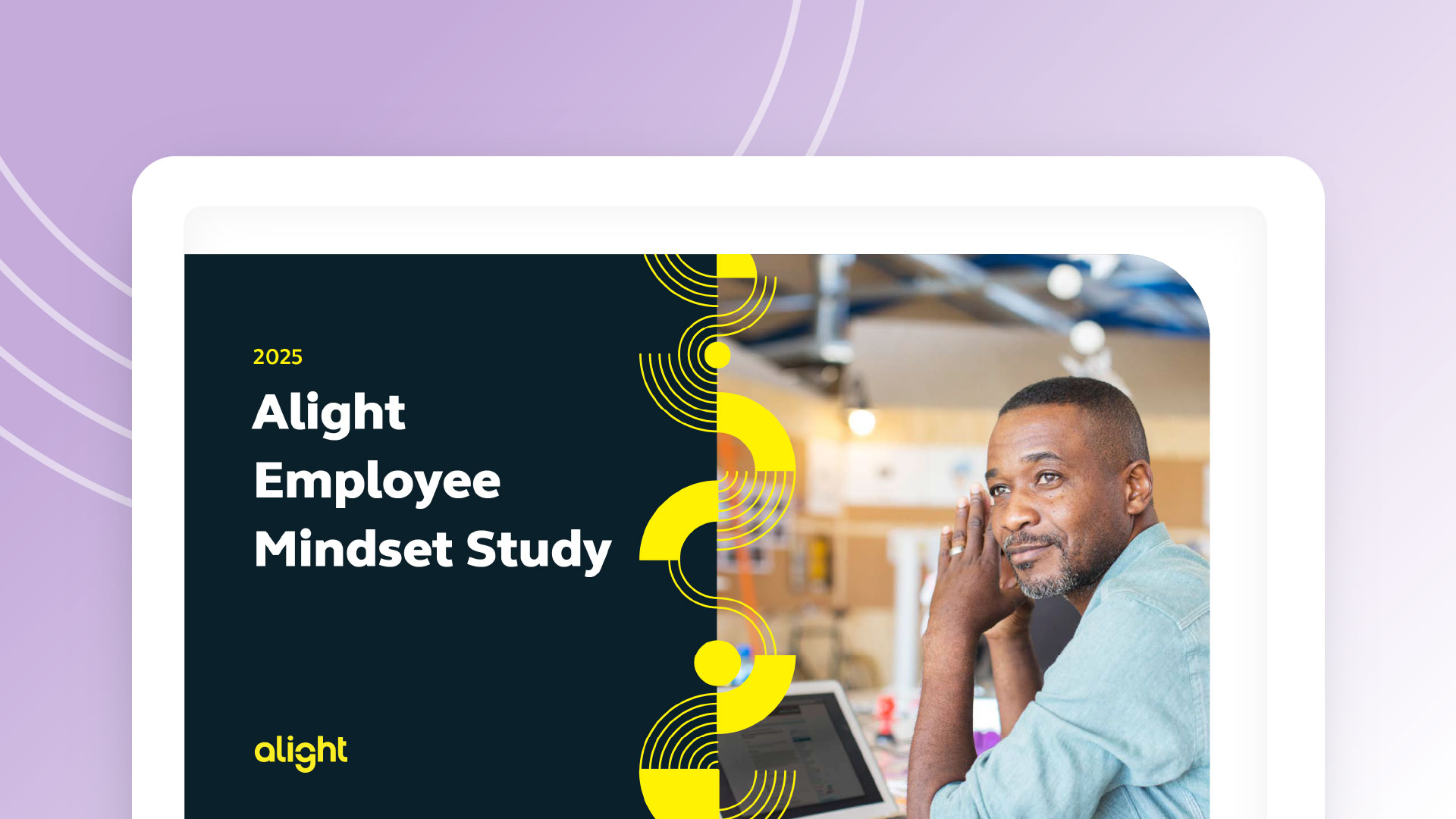
2025 Alight Employee Mindset Study
The 2025 Employee Mindset Study marks Alight's 15th annual report focused on the U.S. workforce.
What younger generations value
Millennials and Gen Z prioritize mental health, financial stability, and work-life balance. They seek employers who demonstrate genuine care and embrace technology-driven solutions.
Organizations that invest in AI-enabled programs see measurable benefits: higher engagement, improved productivity and reduced turnover.
How AI delivers impact
AI creates value for every generation by simplifying complexity and guiding employees through health, wealth and wellbeing decisions with confidence. For Millennials and Gen Z, who expect immediacy and personalization, these capabilities help them navigate the workforce more effectively. For other age groups, AI offers clarity and convenience without sacrificing human connection. AI capabilities also go beyond automation:
- Predictive analytics to detect stress and burnout early
- Personalized recommendations for health and wealth decisions
- Conversational tools that simplify complex benefits with empathy
The future of AI-powered wellbeing
Tomorrow’s AI will anticipate needs, simplify complexity and most important, keep human connection at the center. Through Alight Worklife® and our next-gen LumenAI engine, we deliver on the promises of new technologies.
Additionally, our Alight Partner Network connects your people to the best in point solutions for such specific needs as mental health, musculoskeletal recovery, fertility and stress.
Building trust through responsible AI
As AI becomes integral to wellbeing strategies, trust is essential. Many employees are increasingly comfortable sharing health and financial information in exchange for tailored guidance, but transparency, consent and control must be non-negotiable.
Our approach includes:
- Confidence filtering for reliable outputs
- Strong data governance and compliance
- Continuous monitoring to uphold ethical standards
These safeguards ensure a responsible approach — so employees feel confident in every decision.

How HR leaders can succeed in gaining the trust of Millennials and Gen Z
HR leaders can maximize the impact on younger generations by creating experiences that feel personal and supportive. This means tailoring communication beyond demographics to consider factors like work location, tenure and benefits literacy, while blending digital tools with human guidance for complex decisions.
Closing the gap between access and usage is a great step. Mobile-first platforms, incentives and social recognition can help. Leaders should champion mental health by embedding therapy and coaching options, make AI transparent through clear policies and training, and use it to simplify onboarding for new hires.
Alight’s commitment
At Alight, we combine our 40 years of experience with cutting-edge technology and human understanding to create experiences that matter. Our platform simplifies employee benefits, increases participation and fosters a culture where wellbeing is a top priority. With predictive analytics and conversational AI, we make complex decisions easier — helping all employees (including Millennials and Gen Z) thrive and organizations succeed.


