 Canada (EN)



Introduction: what is an HSA, and what is CIP?
Health Savings Accounts (HSAs) are tax-advantaged savings accounts used to pay for qualified medical expenses, available to people who are enrolled in high-deductible health plans (HDHPs.) Health Savings Accounts are popular for a good reason: they’re one of the most valuable benefits many employers offer. They support everyday care, long-term savings and retirement planning. Yet for many employees, the HSA never fully activates, and its value as a benefit goes unrealized. Often, the reason is not plan design or employee intent; it’s the HSA Customer Identification Program (CIP).
CIP is a federally required identity-verification process that every individual must complete before an HSA can be fully opened and funded. The purpose of CIP is to comply with the USA Patriot Act, which mandates that financial institutions verify the identity of anyone opening an HSA or any other bank account in the United States. The CIP process must be completed before an HSA can be fully opened and funded. When this step fails or stalls, HSA contributions can’t be added to the account. Employer contributions and employee payroll deductions aren’t deposited, and real money is left sitting on the sidelines.
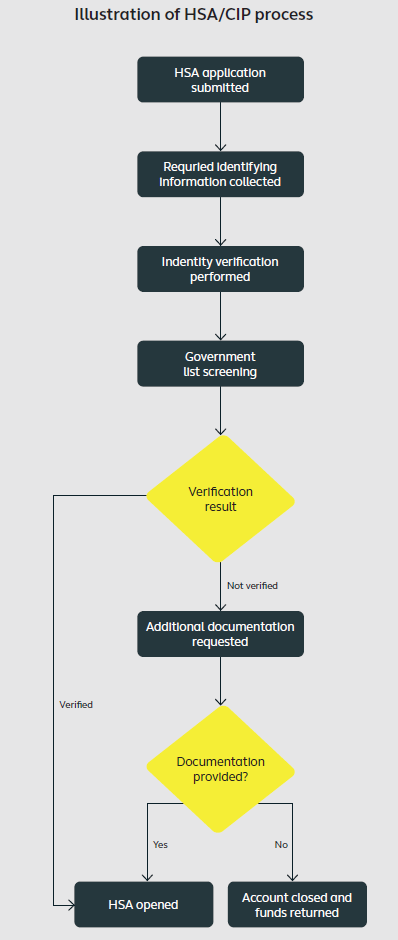
When HSAs stay unopened, contributions stay in limbo
When an HSA fails CIP, the account remains inactive. Contributions are not deposited, even if the employee enrolled correctly. This matters because most employers who provide HSAs for their employees also contribute to HSAs. Employer contributions generally range from hundreds to more than a thousand dollars per year, per account. Employee payroll deductions may also be delayed.
Industry data shows that up to 15 percent of new bank accounts remain in limbo for upwards of 90 days while participants are asked to provide additional information. Many employees never return to finish the process.
The impact on employees
When an HSA doesn’t open, employees lose access to employer contributions. Payroll deductions don’t reach their account. They miss the ability to use, save and invest HSA dollars, and they also lose access to the HSA’s tax advantages. The delay can affect not just the current year, but long term savings and retirement planning.
Unfunded HSA accounts also impact healthcare. Employees may delay or skip care due to lack of available funds. CIP failure is not just a compliance issue; it directly affects benefit value, employee experience and healthcare utilization.
The operational impact on employers
For HR and benefits teams, unopened HSAs create friction. Confused employees call HR, and benefits team members spend time troubleshooting. Many employees don’t realize their HSA is not fully open, while others receive follow up requests days or weeks later and don’t understand what action is required.
When the next step is unclear or inconvenient, employees may abandon the process. The account remains unopened even though contributions are available.
Why CIP failures happen
Across banks and financial institutions, CIP pass rates typically range from 85 to 95 percent. Most employees who fail HSA CIP are not trying to avoid the process. In most cases, the failure comes down to simple data or documentation issues. Common reasons include:
- A name mismatch between the application and government records.
- Incorrect Social Security number or tax ID due to a typographical error.
- Address discrepancies with USPS or credit bureau records.
- Date of birth errors.
- Poor document quality, such as blurry or expired IDs.
- Fraud alerts or OFAC hits.
- Incomplete applications or missing documents.
- Non US residency or citizenship verification needs.
- Thin credit files that cannot be matched through third-party sources.
- Duplicate or conflicting records that trigger manual review.
Each of these issues is fixable. The challenge is helping employees understand what is needed and when. Improving the experience requires faster communication, clearer guidance and fewer handoffs. That’s where real-time support can make a measurable difference.
How employers can make HSA education and HSA CIP faster and easier for everyone
HSA CIP is required; friction isn’t. There are several ways employers can minimize the disruption that CIP can cause for everyone. One way: use real-time AI to change how employees move through identity verification and how quickly HSAs become usable.
How real time AI improves the CIP experience
Real time AI can:
- Identify missing or mismatched information immediately.
- Prompt employees for specific documentation at the moment it’s needed.
- Provide clear, step-by-step guidance.
- Review submitted documents in real time to confirm they meet requirements.
This reduces delays and eliminates unnecessary back and forth.

Why this matters to employees and employers
For employees, faster CIP completion means a simpler, clearer process where HSAs open sooner, employer contributions load on time, payroll deductions flow as expected and they can use, save and invest HSA dollars without interruption. For employers and HR teams, real-time AI helps reduce call volumes and follow-up questions, creating a lower administrative burden. It helps employers realize the value of their investment in benefits by increasing employee utilization of HSAs, and it helps them deliver a better employee experience.
The impact of HSA process failures
Out of 10,000 new HSA accounts:

5% fail CIP
500 accounts

35% incomplete processes
3,500 accounts

~ $7,000
lost FICA tax savings

175 employees miss out
$500 employer contribution
What employers should do about CIP failure: questions to ask your HSA administrator
HSA CIP doesn’t need to be a barrier. Here are three key topics employers should ask their HSA administrators about:
- When employees fail to complete CIP, how is the request for the missing information communicated? Are employees given multiple reminders? Does a human intervene at any point in the process?
- Is real-time AI used during the CIP process?
- How quickly is identity verification completed, on average, for accounts you administer?
The goal isn’t just compliance. It’s completion, through a seamless, simple process that leaves employees feeling supported and allows your organization to reap the benefits of a well-managed HSA program.


